Open 7 days a week, 8 AM to 8 Pm

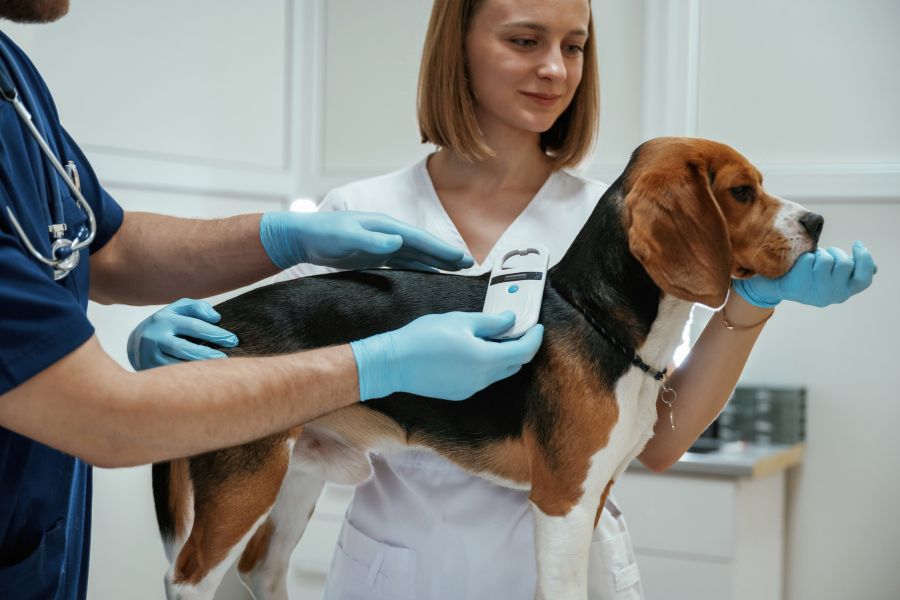
Every year, thousands of pets go missing, leaving owners worried and unsure if they will ever see their beloved companions again. While collars, ID tags, and microchips all play an important role in pet identification, relying on just one method may not provide enough protection.
In this guide, we’ll explore pet microchipping vs. ID tags, explain how each works, discuss their benefits and limitations, and show why using both offers the best chance of a safe reunion if your pet becomes lost. Whether you have a playful puppy, an adventurous cat, or a senior pet, understanding these identification tools can help keep them protected.
Understanding Pet Identification
Pet identification is one of the most important aspects of responsible pet ownership. Even indoor pets can slip through an open door, escape during a storm, or become lost during travel.
When a pet goes missing, the ability to quickly identify and contact the owner significantly increases the chances of a successful return. The two most common forms of identification are:
- Microchips
- ID tags attached to a collar
While some owners assume one is enough, veterinarians recommend using both for maximum security.
What Is Pet Microchipping?
A pet microchip is a tiny electronic device, approximately the size of a grain of rice, that is implanted just beneath your pet’s skin, usually between the shoulder blades.
The microchip contains a unique identification number that can be read using a specialized scanner. This number is linked to your contact information in a pet recovery database.
How Microchipping Works?
- A veterinarian implants the microchip during a quick procedure.
- The chip remains permanently under the skin.
- Animal shelters and veterinary clinics can scan the chip.
- The identification number is matched to the owner’s contact information.
- The owner is contacted when the pet is found.
The procedure is quick, safe, and typically causes only minimal discomfort.
Benefits of Pet Microchipping
Microchipping provides several advantages that make it an essential part of pet safety.
Permanent Identification
Unlike collars or tags, a microchip cannot easily fall off, break, or become unreadable.
Improves Recovery Chances
Studies have consistently shown that microchipped pets are more likely to be reunited with their owners than pets without microchips.
Works for Lifetime Protection
A properly functioning microchip can last for the life of your pet without requiring replacement.
Proof of Ownership
Microchips can help verify ownership in situations involving lost pets, disputes, or emergency evacuations.
Useful During Natural Disasters
Pets can become separated from their families during hurricanes, floods, or other emergencies. A microchip provides a reliable way to identify them even if collars are lost.
Limitations of Pet Microchips
While microchipping is extremely valuable, it is not perfect on its own.
Requires a Scanner
A person who finds your pet cannot simply look at the microchip. The pet must be taken to a veterinary clinic or shelter for scanning.
Database Information Must Be Current
An outdated phone number or address can make a microchip ineffective.
No GPS Tracking
One common misconception is that microchips provide real-time tracking. Standard pet microchips do not function as GPS devices.
What Are Pet ID Tags?
Pet ID tags are metal or plastic tags attached to your pet’s collar. They typically display:
- Pet’s name
- Owner’s phone number
- Address (optional)
- Medical information (optional)
ID tags provide immediate access to contact information without requiring any equipment.
Benefits of ID Tags
ID tags remain one of the fastest ways to reconnect lost pets with their owners.
Instant Identification
Anyone who finds your pet can immediately see your contact information.
Fast Return Home
Many pets are returned directly by neighbors or good Samaritans because of information listed on a tag.
Affordable and Easy to Update
Tags are inexpensive and can be replaced whenever your contact information changes.
Visible Medical Alerts
Owners can include information such as:
- Diabetes
- Epilepsy
- Hearing impairment
- Special medications
This information may be useful if the pet is found injured or requires urgent care.
Limitations of ID Tags
Although valuable, ID tags have some weaknesses.
Can Fall Off
Collars can break, slip off, or become damaged.
Information Can Wear Out
Over time, engraving may become difficult to read.
Not Always Present
Some pets, especially indoor cats, may not wear collars consistently.
These limitations are why veterinarians often recommend pairing tags with a microchip.
Pet Microchipping vs. ID Tags: A Comparison
| Feature | Microchip | ID Tag |
| Permanent | Yes | No |
| Visible Contact Info | No | Yes |
| Can Fall Off | No | Yes |
| Requires Scanner | Yes | No |
| Easy for Finder to Use | No | Yes |
| Long-Term Reliability | Excellent | Moderate |
| Immediate Identification | No | Yes |
| Lifetime Protection | Yes | No |
This comparison highlights that each method serves a different purpose.
Why Your Pet Needs Both?
When discussing pet microchipping vs. ID tags, the real answer is not choosing one over the other. The strongest protection comes from combining both.
ID Tags Help with Immediate Returns
If a neighbor finds your wandering dog, they can call the phone number on the tag immediately without visiting a shelter.
Microchips Provide Backup Protection
If the collar falls off or the tag becomes damaged, the microchip remains available for identification.
Double Protection Increases Success
Using both identification methods creates multiple opportunities for a lost pet to be reunited with its family.
Think of it like having both a house key and a spare key. One is helpful, but having both provides extra security.
Tips for Maximizing Pet Identification Safety
To get the most benefit from both systems:
Keep Microchip Information Updated
Review your registration information annually and update it whenever you:
- Move
- Change phone numbers
- Change email addresses
Replace Damaged Tags
Inspect your pet’s collar and tag regularly for wear and tear.
Use Durable Collars
Choose well-fitted collars designed for your pet’s size and activity level.
Verify Microchip Function
Ask your veterinarian to scan the microchip during routine wellness visits.
Include Multiple Contact Numbers
Providing more than one phone number improves the chances of reaching you quickly.
Common Myths About Pet Identification
Myth 1: Indoor Pets Don’t Need Identification
Even indoor pets can escape unexpectedly through open doors, windows, or during emergencies.
Myth 2: A Microchip Is a GPS Tracker
Standard microchips do not provide location tracking. They only store identification information.
Myth 3: ID Tags Are Outdated
ID tags remain one of the quickest and most effective ways to reunite lost pets with owners.
Myth 4: Microchips Stop Working Frequently
Modern microchips are highly reliable and designed to function for the pet’s lifetime.
Myth 5: One Form of Identification Is Enough
The safest approach combines both a microchip and an ID tag.
When Should Pets Be Microchipped?
Most pets can be microchipped at a young age, often during early veterinary visits or when they are spayed or neutered.
However, it is never too late.
Veterinarians recommend microchipping for:
- Puppies
- Kittens
- Adult dogs
- Adult cats
- Senior pets
Every pet benefits from permanent identification.
Conclusion
When comparing pet microchipping vs. ID tags, it is clear that each offers unique advantages. ID tags provide immediate visibility and quick contact information, while microchips offer permanent, reliable identification that cannot easily be lost. Together, they create the strongest safety net for your pet. Protecting your pet starts with preparation. If your pet is not yet microchipped or needs updated identification, schedule an appointment with Manchester veterinarian Fox Creek Veterinary Hospital to discuss the best identification plan for your furry family member.
FAQs
Q1: Is pet microchipping painful?
Ans: The procedure is very similar to a routine vaccination. Most pets experience only brief, minor discomfort during implantation.
Q2: Can a microchip track my pet’s location?
Ans: No. Standard pet microchips do not contain GPS technology and cannot provide real-time location tracking.
Q3: How often should I update my pet’s microchip information?
Ans: You should update your information anytime your phone number, address, or email changes and review it at least once a year.
Q4: Do indoor cats really need a microchip and ID tag?
Ans: Yes. Indoor cats can escape unexpectedly, and identification significantly improves the chances of being reunited if they become lost.
Q5: What happens if my pet loses its collar?
Ans: If your pet loses its collar, a veterinarian or shelter can scan the microchip to identify you and help return your pet safely.