Open 7 days a week, 8 AM to 8 Pm

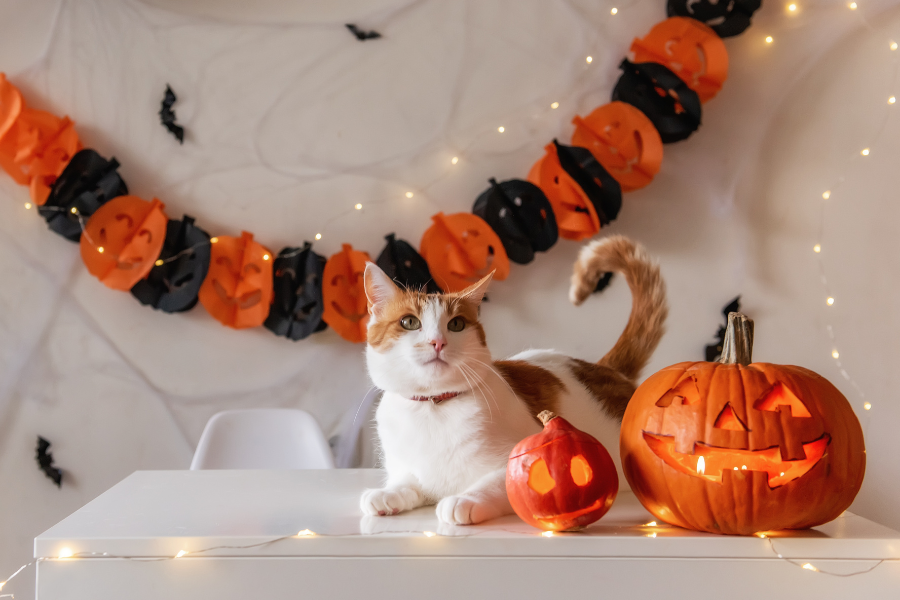
Halloween decorations can make your home feel festive, from glowing pumpkins on the porch to colorful lights and glow sticks at a party. But while these items may look harmless, curious dogs and cats can turn them into unexpected hazards. A wagging tail can knock over a candle, a cat may chew a light cord, or a dog might bite a glow stick out of curiosity. Some risks involve burns or electric shock, while others involve irritation or injury if a pet chews or swallows part of a decoration. The good news is that you can still enjoy Halloween while protecting your pet. Understanding which decorations are safer and how to use them carefully can help you plan a pet-friendly celebration.
Are Halloween Lights, Candles, and Glow Sticks Safe Around Pets?
Halloween lights, candles, and glow sticks are not equally safe around pets. Battery-powered lights can be a safer alternative to open flames when they are sturdy, used as directed, and kept out of reach. Candles can cause burns or fires, while chewed glow sticks may release chemicals that irritate a pet’s mouth and eyes. No decoration should be left where a pet can chew it, knock it over, or swallow its parts.
Your pet’s behavior matters, too. A dog that investigates objects with its mouth may be more likely to chew cords or plastic decorations. Cats may jump onto shelves, bat at dangling items, or explore narrow spaces behind displays.
Before decorating, consider these basic precautions:
- Choose stable decorations that cannot easily fall over.
- Keep electrical cords, batteries, and small parts out of reach.
- Avoid open flames in areas where pets can roam.
- Store glow sticks and other light-up accessories securely.
- Supervise pets around new decorations.
- Give your pet a quiet space away from noisy or brightly lit displays.
Even when a decoration is labeled as safe for general household use, that does not mean it is safe for chewing or swallowing. A little planning can help reduce risks without taking away the fun of Halloween.
Are Halloween String Lights Safe for Dogs and Cats?
String lights can be a good way to brighten a Halloween display, but they need careful placement. Dogs may chew exposed cords, while cats may bat at dangling lights or climb behind furniture to investigate them. Damaged wires can create a risk of electric shock or burns.
To use string lights more safely, choose products designed for their intended location and follow the manufacturer’s instructions. Secure cords along walls or behind furniture where pets cannot reach them. Keep light strands away from beds, scratching posts, and other places where pets spend time.
Check the lights before using them. Avoid any set with frayed wires, cracked bulbs, loose connections, or exposed components. Unplug decorations when you leave home or cannot supervise your pet, and do not let animals play with the cords even when the lights are switched off.
Battery-operated lights can reduce some electrical risks, but they are not automatically safe. Pets may chew the casing or swallow loose batteries. Keep battery compartments firmly closed and replace damaged decorations rather than trying to repair them where a pet could reach the parts.
If your pet bites a plugged-in cord, do not touch the animal or the damaged cord while the electricity is still on. If possible, disconnect the power safely first. Seek immediate veterinary advice if your pet may have suffered an electric shock, even if the injury is not obvious. Electrical injuries can cause burns and other complications that may not be visible right away.
Why Are Candles Dangerous for Pets?
Candles create a warm glow, but an open flame can be risky in a home with pets. A dog may knock a candle over with its tail, while a cat may jump onto a table and brush against the flame. Pets can also burn their noses, paws, or fur if they get too close.
The danger goes beyond direct contact with the flame. A fallen candle can ignite nearby decorations, fabric, or furniture. Halloween displays often include paper, artificial leaves, and other materials that can catch fire easily.
For a safer setup:
- Choose flameless LED candles instead of open flames.
- Keep all lighting on stable surfaces away from pets.
- Avoid placing candles near curtains, costumes, or paper decorations.
- Never leave a lit candle unattended.
- Keep pets away while lighting or extinguishing candles.
- Check that decorative lanterns cannot tip over easily.
Flameless candles can be a practical alternative, but still inspect them for loose batteries, small removable parts, and chewable plastic. A curious pet may treat a glowing object as a toy, especially if it is placed near the floor.
If a pet comes into contact with a flame or hot wax, do not apply household creams or other remedies without veterinary guidance. Contact your veterinarian for advice, particularly if the skin is damaged, the area is painful, or the burn involves the face or paws. Serious burns need prompt assessment.
Are Glow Sticks and Glow Jewelry Toxic to Pets?
Glow sticks, glow bracelets, and light-up necklaces are popular Halloween accessories because they glow without a flame. However, they can still pose a risk if a pet bites through the plastic casing.
The liquid inside many glow products can cause an unpleasant, bitter taste and irritation of the mouth. A pet may drool, paw at the face, shake its head, or vomit after chewing one. Some animals may become frightened by the taste and behavior changes that follow.
If your pet bites a glow stick:
- Move the remaining product out of reach.
- Prevent your pet from chewing or licking any more of the material.
- If liquid is on the fur or skin, contact your veterinarian for advice on safe cleaning.
- If the product has entered the eyes, seek prompt veterinary guidance.
- Watch for continued drooling, vomiting, unusual behavior, or signs of discomfort.
Do not induce vomiting unless a veterinary professional specifically instructs you to do so. If your pet has chewed the plastic casing, there may also be a risk from swallowed plastic pieces.
Not every exposure causes severe illness, but the product and amount involved matter. Keep the packaging if available, and tell your veterinarian what type of glow product your pet encountered. If symptoms are severe or your pet has difficulty breathing, collapse, or marked weakness, seek urgent veterinary care.
The safest option is to keep glow sticks and glow jewelry away from pets entirely. Use them only where pets cannot reach them, and store unused items in a closed container.
What Should You Do If Your Pet Chews a Halloween Light or Decoration?
If you discover your pet chewing a light, candle accessory, glow stick, or other decoration, first move the item out of reach. Then check whether any pieces are missing and whether your pet is showing signs of injury or illness.
The next step depends on what happened. Chewing an unplugged plastic decoration is different from biting a live electrical cord or swallowing a battery. Batteries, sharp fragments, and potentially harmful chemicals can cause serious problems even before symptoms appear.
Contact a veterinarian promptly if you suspect your pet has swallowed a battery, chewed an electrical component, or been exposed to a potentially harmful substance. Explain what the item was, when the incident occurred, and whether your pet swallowed any pieces. A photo or product packaging can help identify the materials involved.
Seek urgent veterinary care if your pet has:
- Difficulty breathing or signs of choking.
- Burns around the mouth or on the paws.
- Repeated vomiting or severe drooling.
- Sudden weakness, collapse, or unusual responsiveness.
- Pain after chewing an electrical cord.
- Suspected ingestion of a battery or sharp object.
Do not try to make your pet vomit or give home remedies without veterinary instructions. If a piece of decoration is stuck in your pet’s mouth or throat, do not push it farther inside while attempting to remove it.
If the pet appears normal after the incident, contact a veterinarian for guidance anyway when the item may be dangerous. Some injuries and complications take time to become noticeable.
How Can You Create a Pet-Friendly Halloween Lighting Display?
You do not need to skip Halloween decorations to keep your pet safe. The goal is to choose suitable products, position them carefully, and prevent your pet from chewing or knocking them over.
Use this checklist when setting up your display:
- Choose flameless lighting: LED candles can provide a festive glow without an open flame.
- Secure cords: Keep wires behind furniture or use suitable cord covers to prevent chewing.
- Keep small accessories stored away: Glow sticks, batteries, and removable decorations belong in closed containers.
- Stabilize decorations: Place lights and displays where they cannot be easily knocked down.
- Avoid dangling items: Hanging strings and low decorations may tempt pets to play with them.
- Create a quiet area: Give your pet a comfortable room away from bright lights, sound effects, and visitors.
- Inspect your setup: Look for loose pieces, damaged wires, or exposed batteries before allowing pets near the display.
Think about your pet’s usual habits when choosing where to decorate. A cat that climbs shelves may need a different setup from a dog that chews items on the floor. If you cannot make a decoration inaccessible, it may be better to leave it out.
Also remember that Halloween lighting is only one part of holiday safety. Keep candy, wrappers, and other seasonal treats securely stored. A festive display should not give pets easy access to food or small objects that may be harmful if swallowed.
When Should You Contact a Veterinarian?
Contact a veterinarian if your pet has chewed a glow stick, swallowed a decoration, or come into contact with a potentially harmful substance. You should also seek advice if your pet develops mouth irritation, persistent drooling, vomiting, or unusual behavior after investigating a light or candle accessory.
Some situations require urgent care. Seek immediate veterinary help if your pet has trouble breathing, collapses, suffers a suspected electric shock, develops a serious burn, or may have swallowed a battery. Do not wait for symptoms when the object itself poses a significant risk.
When you call, provide as much detail as possible about the product and the incident. Tell the veterinary team whether the item was plugged in, whether any parts are missing, and what symptoms you have noticed. Bring the packaging or a photo if available.
If your pet has been exposed to a chemical or glow product, avoid using home remedies unless instructed by a professional. Prompt guidance can help you determine whether your pet needs an examination or further treatment.
Enjoy a Brighter, Safer Halloween With Your Pet
Halloween lights, candles, and glow sticks can add a festive touch to your home, but each comes with risks when pets can reach them. Choose flameless lighting where possible, secure electrical cords, store batteries and glow products safely, and never leave open flames unattended around animals. Most importantly, supervise your pet and act promptly if you suspect chewing, swallowing, or an injury.
If you are concerned about a decoration-related injury or possible exposure, and are searching for a vet near you, then Fox Creek Veterinary Hospital in Manchester, MO, can help you understand the next steps. Contact the clinic if your pet shows unusual symptoms or may have encountered something harmful. With a few practical precautions, you can enjoy Halloween decorations while helping your dog or cat stay safe and comfortable.
Frequently Asked Questions
Q1: Are battery-powered Halloween lights safer than candles around pets?
A: Battery-powered lights avoid the open-flame risk of candles and may be a safer option when placed securely. However, pets can still chew the casing or swallow loose batteries. Keep lights and batteries out of reach and inspect decorations for damage.
Q2: What should I do if my dog chews a glow stick?
A: Remove the remaining glow stick and contact your veterinarian for guidance, especially if your dog is drooling, vomiting, or seems uncomfortable. Do not induce vomiting unless a veterinary professional tells you to. Keep the product packaging so you can identify the item.
Q3: Can cats get electrocuted by Halloween string lights?
A: Yes. Chewing a plugged-in electrical cord can cause burns or electric shock. Keep cords secured and out of reach, and seek immediate veterinary advice if you suspect your cat has bitten a live wire.
Q4: How can I decorate for Halloween safely when I have pets?
A: Use flameless candles, secure electrical cords, and keep glow sticks, batteries, and small decorations in closed storage. Choose stable displays that pets cannot knock over, and provide a quiet space away from busy decorations and visitors.
Q5: When should I contact Fox Creek Veterinary Hospital about a Halloween decoration injury?
A: Contact Fox Creek Veterinary Hospital if your pet chews a glow stick, swallows a decoration, or develops mouth irritation, vomiting, or unusual behavior. Seek urgent veterinary care for difficulty breathing, burns, suspected electric shock, collapse, or possible battery ingestion.