Open 7 days a week, 8 AM to 8 Pm

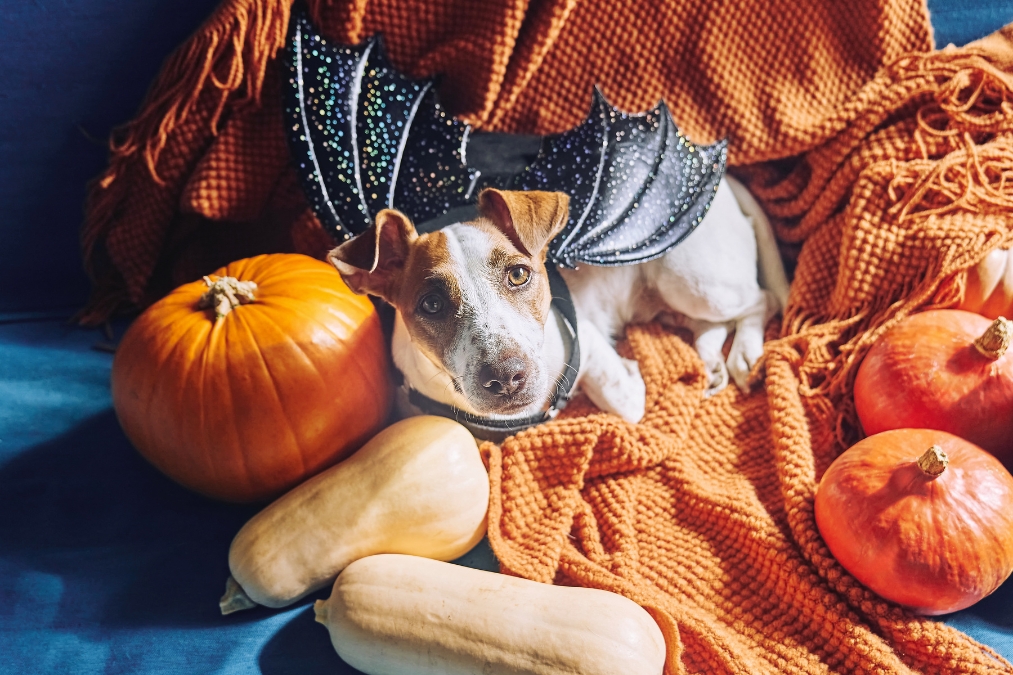
Halloween can be a fun and festive time for families, but when you share your home with a dog, the excitement can also bring risks. From trick-or-treaters at the door to spooky decorations and candy in tempting reach, you need to take extra steps to keep your furry friend safe and comfortable. In this post, we’ll guide you through effective ways to protect your dog during Halloween celebrations. We’ll cover how to prepare your home, help your pet relax, avoid hazards, and respond quickly if something goes wrong.
1. Prepare Your Home Before the Fun Begins
First, plan ahead by making your home dog-friendly for Halloween. Place decorations away from your dog’s reach. For example, long window drapes, dangling lights, and static props may catch paws and tails. Meanwhile, noisy decorations like jack-o’-lanterns or motion-activated ghosts can startle a nervous dog. Therefore, secure cords, prop plastic items up high, and avoid hanging gummy decorations within sniffing range.
Also, set up a quiet retreat for your dog. A hallway or room away from the main entrance makes an ideal space where your dog can relax without the constant doorbell or ringing ghost sounds. Place familiar bedding, toys, and water there. Next, let your dog explore the space during calmer times so it becomes a safe haven rather than an alarming new spot.
2. Manage the Doorbell Rush
Trick-or-treaters inevitably bring a barrage of doorbell rings and knocks. Dogs often associate those actions with strangers entering, which can trigger alert barking or even escape attempts. To minimize stress, consider confining your dog in the prepared quiet area before the doorbell begins. Meanwhile, you could use a doorstop, distraction device, or even a “please ring quietly” sign for visitors.
Also, before the evening begins, rehearse with your dog. Practice calming cues like “sit” or “stay” when someone knocks. This way, the high-traffic hour won’t feel completely novel for your dog. Additionally, ensure your yard gate is securely latched and the front door is tightly closed to prevent a startled escape.
3. Prevent Candy-Related Incidents
Candy is everywhere during Halloween — and some are tasty to dogs. Chocolate, sugar-free candies with xylitol, and even wrappers pose serious risks. Therefore, store all candy in sealed containers out of reach. Also, advise children and guests to never share human treats with the dog. Remind them that even a small piece of chocolate or a wrapper swallowed can cause gastrointestinal upset or more serious complications.
If you serve treats in bowls at your door, place them on high surfaces or use bowls with lids to reduce temptation. Meanwhile, supervise your dog when curious visitors arrive. If your dog tends to beg, introduce a diversion like a chew toy or treat puzzle to keep it busy and away from the candy table.
4. Choose Costumes With Care
Dressing up your dog can be adorable — but only if the costume is safe and comfortable. Avoid costumes that restrict movement, block vision, or include chewable parts that your dog might ingest. Choose soft, breathable fabrics and ensure there are no small bells or dangly attachments. Next, introduce the costume during a calmer moment, and let your dog wear it briefly so you can watch for signs of stress (scratching, panting, trying to remove it).
Meanwhile, if your dog clearly dislikes the costume, skip it. A happy dog is a safe dog. Letting your dog go without the outfit is far better than forcing a costume that might prompt discomfort, escape attempts, or a refusal to move.
5. Maintain Regular Routine
Dogs thrive on routine, and Halloween’s flurry of activity can disrupt it. Whenever possible, keep your dog’s schedule consistent: walks, feeding times, play sessions, and rest periods. Also, make sure your dog receives a good exercise session earlier in the day. That way, by the time trick-or-treaters start arriving, your dog is more settled and less likely to react to every knock or costume.
If you plan to host the party or hand out candy late, consider the dog’s welfare by giving it a break in a quieter room or maybe scheduling its bedtime a little earlier. This helps prevent overexcitement or anxiety caused by the extended evening hustle.
6. Mind Outdoor Hazards
If your dog will be outside during any part of the evening, check the environment for added risks. Decorative lighting or extension cords might be stretched across the lawn or driveway — trip hazards for pets. Moreover, lit pumpkins present an open flame risk. Dogs may knock them over, causing burns or fire hazards. So place lit decorations out of your dog’s path and ensure they are on stable surfaces.
Also, costumes on children or adults might have trailing capes or props that a mischievous dog could bite and pull. Keep your dog away from driveways or dark areas where it might not see approaching vehicles or guests. Use reflective gear or a light-up collar if outdoor activity is unavoidable.
7. Watch for Signs of Stress or Overexcitement
During Halloween, your dog might act differently. Signs like panting, yawning, unlikely hiding spots, excessive barking, trembling, or refusing to eat could signify anxiety. Likewise, if your dog seems overly excited and bounces at guests or tries to slip out the door, that’s a dangerous moment. In both cases, intervene immediately: provide a calm voice, lead your dog to the safe retreat you set up, offer a chew toy, and reassure gently.
If your dog is prone to anxiety or hasn’t handled strangers or costumes before, consider a temporary separation: keep it in a soundproof room with music or a white-noise machine. Offers of sweets might trigger begging and jumping — reinforce calm behavior instead of feeding into the excitement.
8. Rely on Identification and Microchip Info
In the noise and excitement of Halloween, dogs can accidentally slip out. That’s why you must ensure your dog’s ID tags are current and the microchip information is up to date in your registration database. If your dog wears a costume, the name tag should still be visible. Consider adding a reflective collar or tag for extra visibility if you’ll be going outside. In case of a surprise escape, a clear photo of your dog and up-to-date contact information increase the chances of a safe return.
Halloween can turn into a joyful evening for your family and your dog alike if you plan ahead, stay alert, and respect your pet’s comfort zone. Remember to keep dangerous items — like candies, open flames, and loose decorations — out of reach, and always maintain a consistent routine to minimize stress. If any unusual behavior arises or you’re unsure about your dog’s health during or after the festivities, contact your veterinarian promptly for professional guidance. A little preparation and attention go a long way in ensuring your dog stays safe and relaxed while everyone enjoys the spooky fun.
FAQs
Q1. Can my dog eat Halloween candy?
Ans. No. Most Halloween candies—especially chocolate and sugar-free treats containing xylitol—are harmful to dogs. Wrappers also pose choking or obstruction hazards. Always keep sweets out of your dog’s reach.
Q2. Should I put my dog in a costume for Halloween?
Ans. If your dog tolerates it and the costume is safe, comfortable, and non-restrictive, yes. However, if your dog seems stressed, remove the costume and focus on its comfort and calm first.
Q3. What should I do if my dog gets frightened by costumes and visitors?
Ans. Direct your dog to its quiet retreat, reassure it with calm words, and give it a safe toy or chew. Avoid forcing interaction. If fear persists, confine your dog away from the noise and excitement.
Q4. How can I prevent my dog from escaping during trick-or-treat hours?
Ans. Ensure gates are closed and latched, doors are supervised, identification tags are visible, and microchip info is updated. Place your dog in a secure, low-traffic area away from the front door during peak visiting hours.
Q5. Are decorations dangerous for dogs?
Ans. Yes, some are. Cords, lit pumpkins, inflatables, and dangling items can all pose risks. Secure decorations, hide wires, keep open flames far away, and monitor your dog’s interactions with any décor.
Q6. My dog was exposed to candy that’s harmful—what should I do?
Ans. If your dog ingests chocolate, xylitol-laced candy, or a candy wrapper, monitor for vomiting, diarrhea, weakness, or seizures. Call your veterinarian immediately for advice tailored to the situation.